


I’m excited to share my Financial LIFE Planning submission with you this week—How To Know When To Spend A Lot Of Money—but first, I need to tell you a story that I learned from one of our newest advisors at SignatureFD over lunch this past week that is, frankly, more important.
It’s about Martin Luther King Jr.’s 1964 Nobel Peace Prize and what happened when my adopted hometown of Atlanta tried to honor him with an integrated dinner. When invitations went out to the city’s white business elite, the response was, well, underwhelming. So Mayor Ivan Allen turned to Coca-Cola CEO J. Paul Austin for help.
Austin, who had witnessed apartheid’s devastation in South Africa, gathered Atlanta’s business leaders and told them plainly: “It is embarrassing for Coca-Cola to be located in a city that refuses to honor its Nobel Prize winner. We are an international business. The Coca-Cola Company does not need Atlanta. You all need to decide whether Atlanta needs the Coca-Cola Company.”
Apparently, within two hours, every ticket was sold.
The story raises questions that still matter: What does it mean to truly serve a community? And how do we measure what’s worthwhile when profit and principle collide?
Thanks for joining us this weekend, and I hope you’ll also pause to consider why it is, indeed, longer than usual!
Tim
Tim Maurer, CFP®, RLP®
Chief Advisory Officer
In this Net Worthwhile® Weekly you'll find:
Financial LIFE Planning:
How To Know When To Spend A Lot Of Money
NWWW Podcast (New!)
Market Forecast For 2026
Quote O' The Week:
Dr. Martin Luther King, Jr.
Weekly Market Update:
Mixed, But Mostly Up
Financial LIFE Planning
How To Know When To Spend A Lot Of Money
We used to wear suits.
It wasn’t an unspoken rule. It was the rule. If you worked in finance, you wore a suit. It took several years, early in my career, but eventually I had a closet full of them. Now, they all reside with bargain hunters at a few different Goodwill locations.
But even if I kept this wardrobe war chest, it would still be nearly worthless—because they’d all be out of style. Pronounced shoulder pads in the jackets, baggy pants with a serious break at the ankles.
Imagine if I’d had the money back then to buy really nice suits. All I’d have to show for it is slightly higher itemized receipts from Goodwill.
Now, I’m definitely not telling you how to dress. That’s not the point. The point is to address how we spend our money and how to get the most utility—the economist’s vernacular for joy, interestingly—from our expenditures.
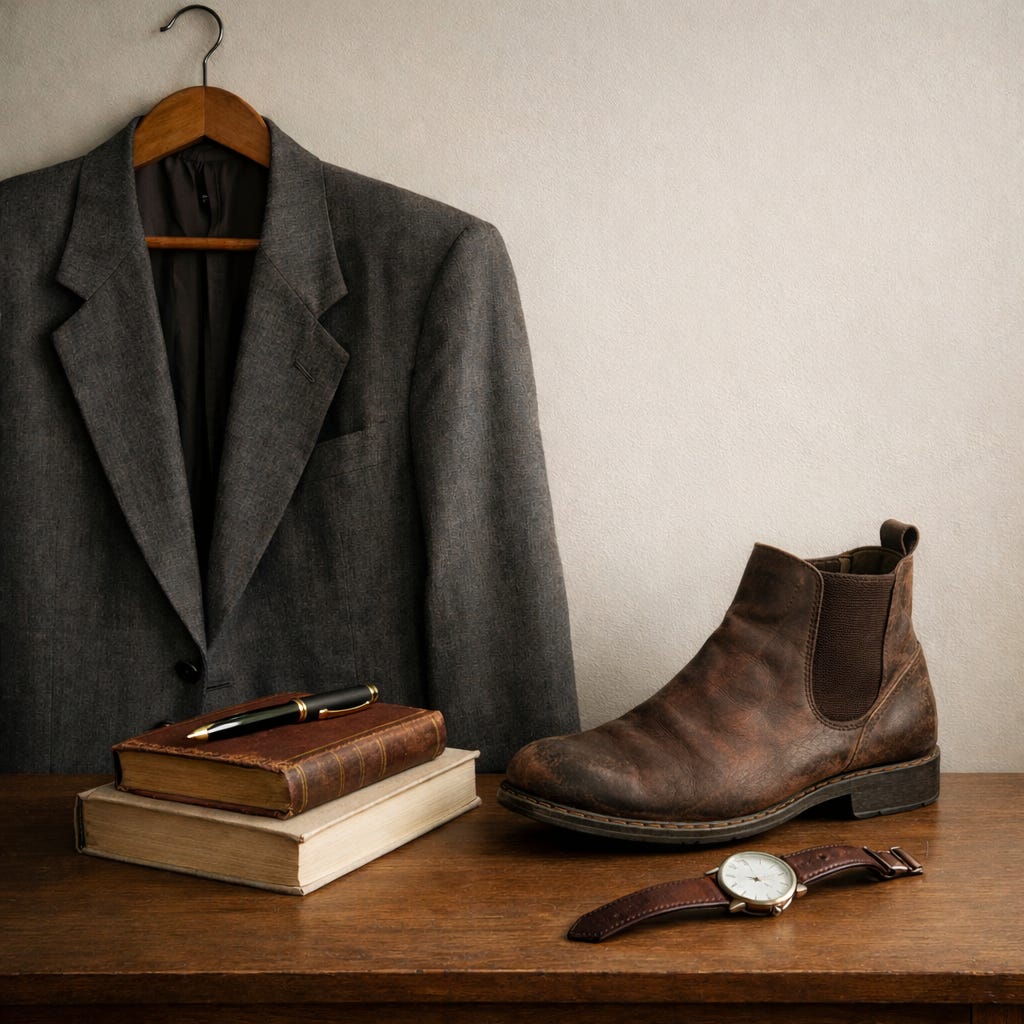
Here are three ways to know when to spend a lot of money:
Dr. Meir Statman at Santa Clara University has done so much to help us understand the value—and lack thereof—of our money expenditures. He suggests that there are three primary benefits to be derived from spending our cash: utilitarian, emotional, and expressive. Let’s address each in human terms:
The Obsolescence Test (Utilitarian)
Sure, there are still good reasons to buy a suit, and maybe even to “invest” some decent money in one. But is it possible that by the time any suit starts to show signs of fading that it is likely going to be out of style? I’d wager that’s entirely possible.
So, what are those purchases that are more likely to pass the obsolescence test?
Things that don’t depend on trends or fashion: A classic watch versus a trendy one. Quality cookware versus kitchen gadgetry.
Things that improve with age or use: Musical instruments or staple leather shoes or boots. Maybe a classic car or a particular tool.
Infrastructure vs. decoration: Custom bookshelves versus a lampshade.
Books: This one might be a personal preference, but there are books that I paid $20 for that have given me hundreds or thousands of dollars in value—some that have changed my life in ways that are incalculable—so I’ve never hesitated to spend money on a book. Plus, you need something to fill those custom bookshelves, right?
Unlike the examples to come, the obsolescence test is more objective or actuarial. The big question is, “Will this thing still be useful and/or valuable in 5 to 10 years—or will it become obsolete?”
The Joy Projection (Emotional)
But what about the emotional benefits of certain expenditures—the ROE, Return on Experience? You’ve likely heard that money spent on experiences is thought to bring us more joy per dollar than that which is spent on stuff, at a rate of at least 2-to-1. But there are certainly also tangible items that facilitate experiences, right? And what about experiences or stuff that we buy for other people? Let’s look at each:
Experiences often compound in value: The bucket list trip you planned for a year and documented through artful pictures and journaling hits on at least three different levels: the planning and anticipation, the experience itself, and the memories that just seem to build over time. And it need not even be an Instagram-worthy occasion, as we can build all three components of memory maximization through experiences that don’t cost a lot either. In fact, the creativity required to craft an experience on a budget can be yet another factor that adds to the overall joy derived.
Experience-enhancing stuff: A good friend of mine has a meaty four-wheel drive pickup truck, but he’s not just posturing. He’s a bona fide adventurer, so that truck is packed with a generator-powered fridge, a pop-up tent, and sufficient gear to take a whole crew off the grid. It’s an unforgettable experience on four wheels for up to five people.
The gift of anything above: And let’s not forget that the giving of experiences or experience-enhancing stuff is one of the greater sources of joy. My brother-in-law was a professional DJ (who literally toured with Method Man) and bought his daughter a beginner rig when she expressed interest in learning the craft.
The Identity Question (Expressive)
Is this purchase expressing who you are or building who you hope to become? There’s nothing wrong with buying something because it sends a message about what’s important to you, but there is a nuanced difference between being genuinely expressive and simply projecting an identity that is more of a facade. Here are three (difficult) questions that can help us know the difference:
Are you buying the identity or living it?
Whose approval are you purchasing?
Does this align with who you are, or who you are becoming?
I can surf, but I’m not a surfer. I can snowboard, but I’m not a snowboarder. I love hiking, but I’m not a climber. And the only golf I should be playing is on a putt-putt course or the Angry Birds module at Top Golf.
Therefore, it would be silly for me to buy a top-of-the line surfboard, snowboard, or driver. In fact, those performance level instruments would likely lead to a more challenging and less enjoyable experience for me—so why would I spend extra money on them, if not to project an identity that isn’t mine?
There’s a twist.
Nobody can tell you what makes sense for you.
I know people who still wear suits, maybe expensive ones, too. At least one of them does so because it makes him feel more serious about his important work. It’s more like a uniform than a suit; when he puts it on, he feels like he does better work. And dang, he does amazing work—and he always looks sharp doing it.
Indeed, nobody can tell you what is right or wrong to spend money on. (This is something that the financial industry has gotten really, really wrong, by the way—as the collective regularly condescends to those they serve, simply because their values or preferences may differ.)
But I bet you know. Especially if you take a moment (or better yet, a month) before making a substantive purchase, you likely know whether there’s commensurate utility to be gained from that expenditure, or if the emotional value of the purchase is proportionate to the price, or if the expression is one that is genuine to who you are rather than who someone else might want you to be.
The hard part isn’t knowing; it’s being honest with ourselves and acting accordingly.
NWWW Podcast (New!)
2026 Market Outlook: Beyond The Forecast
From lessons learned in 2025 to a forecast—or “forecast,” really—for 2026, Tony and I break it down, including the following:
What’s a “K-shaped economy” anyway, and will it continue in 2026?
AI: The transition from enablers to users
Evergreen investment principles in any year
Quote O' The Week
Dr. Martin Luther King Jr. (1929-1968) was a Baptist minister and the most prominent leader of the American civil rights movement. Drawing on his deep Christian faith and the nonviolent resistance philosophy of Mahatma Gandhi, King led transformative campaigns against segregation and racial injustice, including the Montgomery Bus Boycott and the March on Washington, where he delivered his iconic "I Have a Dream" speech in 1963.
He was awarded the Nobel Peace Prize in 1964 at age 35, making him the youngest recipient at the time. King's vision extended beyond civil rights to encompass economic justice and opposition to what he called the "giant triplets" of racism, materialism, and militarism. He was assassinated in Memphis on April 4, 1968, while supporting striking sanitation workers. We honor his legacy on the third Monday of January each year.
"We must rapidly begin the shift from a 'thing-oriented' society to a 'person-oriented' society. When machines and computers, profit motives and property rights are considered more important than people, the giant triplets of racism, materialism, and militarism are incapable of being conquered."
Weekly Market Update
The S&P was down slightly, but the remaining equity indices were up:
- 0.38% .SPX (500 U.S. large companies)
+ 0.64% IWD (U.S. large value companies)
+ 2.13% IWM (U.S. small companies)
+ 2.22% IWN (U.S. small value companies)
+ 1.34% EFV (International value companies)
+ 0.69% SCZ (International small companies)
- 0.25% VGIT (U.S. intermediate-term Treasury bonds
Have a great rest of your long weekend!
Tim
The obsolescence test is really useful, especially infrastructure versus decoration.
What makes this hard for people isn't the framework. It's truthfully asking: "whose approval are you purchasing?" and thinking long and hard enough to answer honestly.
Most people already know what truly matters. They just need permission to act like it.
When you say, “The hard part isn’t knowing; it’s being honest with ourselves and acting accordingly,” those words really stuck with me.
This may sound strange, but for me to spend a lot of money, it takes a lot of effort to be honest with myself—and even more effort to act accordingly. Those are two big hurdles. That said, in some cases I can get there and spend the money. In other cases, it becomes a vicious circle of overanalysis.
In the situations where I have spent a lot of money, I rarely regret it. So the process works. I just need to trust the process more consistently.
In some ways I’m happy it takes me so long to decide on spending. It makes me feel like I’ve done the hard work necessary to earn the reward. That mindset lowers the chances of regret.
Final thought: I wonder if people struggle more with the honest part or the action part.